 Robbo – The Blog of Andrew Robertson
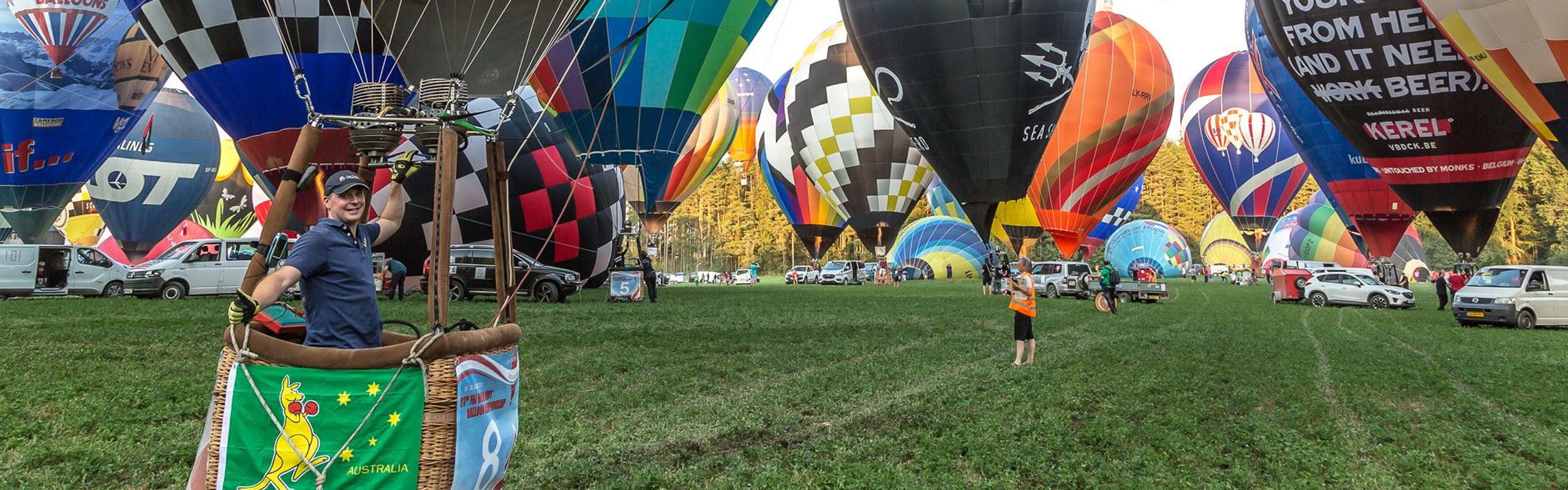
One of the perks of working from home is that I can work from anywhere. So last Monday I headed down to Canowindra to get some pre-work flying in and finally get some actual practice in.
I did not have any crew for Tuesday morning, so I headed out on my own ready to strap my bike to the side of the basket and use that for retrieve. Unfortunately every pibal I let off went straight up and I really did not want to end up becalmed over town without a crew to help retrieve me. So I decided not to fly, but spend a couple of hours checking the accuracy of the new map that has been produced.
For the last 20 years we have been flying on a decent, but old (hand drawn) map. This has now been replaced by a new digital data map that my mate Sean Kavanagh has put together. The map is great to fly with, but unfortunately the data that has been supplied is missing a number of the intersections that we have previously used as goals. I went and checked out these intersections and it appears that the issue is that these intersections are actually substantial drive ways and hence the data did not classify them as roads. I have brought this to the attention of the competition director (Garry Lockyer). At the end of the day, it doesn’t really matter if the road is not marked, because we will be simply flying to the waypoint.

Example of one of the missing tracks
Wednesday morning was another very still morning, but fortunately I had one of the local balloonists, Caitlin, come out to drive for me. The morning ended up being a typical Canowindra morning, where the wind drained down the river valley at sunrise. So I decided to do the normal Fly In to the ovals in town. My plan for the morning was really to just get a feel for flying again because it had been 4 months since I had flown. I had also just purchased a third large 76L and I wanted to get used to the extra weight. The flight ended up only being about an hour, because there were a lot of rain showers on the horizon and I really did not want to pack up a balloon in the rain.

Rain in Cowra
I was really happy with the way I flew. I managed to get about a 20cm Gravity Marker Drop (i.e. vertical marker drop rather than throwing it) on the cricket pitch on the oval.

Gravity Marker Drop
The extra weight in the basket also made a great difference. The main benefit (apart from having more fuel than I will ever need to use) is that the balloon stays a lot more stable when doing really fast descents. When you are too light, the balloon needs to dump more air to go fast and then starts distorting more to come down.
Probably the best thing of these couple of days is that I feel like I am now actually getting ready for the Nationals. I have spent so much time in the last year working on my physical and mental fitness, but I was really getting a bit tense about not flying.
We plan to head down to Canowindra next week and then I will be doing a Monday/Tuesday with Matt and Nicola Scaife the following week. So hopefully we will get another 4 flights in before the event.
It has been a while since I have posted on my blog. However, the Nationals are on in 2 months, so it is time to resurrect the blog and start writing about my progress.
The Nationals is going to be in Canowindra again (same location as the last 3 Nationals). The event is being run in late April, starting on Easter Monday. This year’s event is looking like it will be an amazing competition. They have got some of the top pilots from USA, Japan and Russia coming out. All up, there should be about 25 balloons competing.

Canowindra Challenge Website – http://www.canowindrachallenge.org.au/
I have been putting a lot of work into preparing for these Nationals. Unfortunately, being Summer in Australia, I have not been able to do any flying for a couple of months. So my preparation has had to be more mental and physical, rather than actual flying time.
About 6 months ago, after reflecting on my not so good performance at the last Nationals (6th place), I realized that I really need to work on my psychology leading up to the event. I have proven over the years that I have the ability to fly to targets. The thing that really lets me down during the competitions has been my mental state. Looking back at recent competitions (and analyzing a lot of inflight video) I have found that there are a number of things that really hinder my ability to win an event. I won’t go into the details, but they range from being distracted, taking safe options, not focusing enough or getting frustrated. I rarely get into the “zone”. I also put a lot of pressure on myself and get disappointed when I don’t win.
So to counter these short comings, I have put a lot of time into studying sports psychology and analyzing what I do right and wrong. I have also adopted visualization techniques (used by a lot of sporting greats), where you focus on the end goal and visualize the goal and how to get there. There are 2 books that I have been using for information about “how to win”.
The first, which is the main book I have been using, is called Above All Else: A World Champion Skydiver’s Story of Survival and What It Taught Him About Fear, Adversity, and Success by Dan Brodsky-Chenfeld. This book really surprised me. It was just a random book I downloaded from Amazon because I needed something to read. The first half of book focuses on how Dan started parachuting and then his journey to winning the World Championships for 4s formation skydiving. However, the more interesting part is the second half which focuses on the science behind winning.

Above All Else
The second book, which reminds me I need to read it again, is called the Mind Gym by Gary Mack. Gary is a sports psychologist who has spent years working with US baseball and football teams and players. It is incredible how many little things you pick up in this book that you realize you have been doing wrong mentally for so many years. They seem so obvious but without stopping and thinking about them, you would never realize.

Mind Gym
I have also been working hard on my fitness. Whilst ballooning isn’t an athletic sport as such, being fit allows you to have more endurance throughout the event and helps keep you focused. A week of competition involves a lot of flying, inflating and packing up balloons. Not sleeping a lot and eating meals at random times. Every bit of fitness helps get you through the week. My fitness training regime has no real pattern to it, because I have been doing a lot of international travel lately, which tends to kill any concept of a routine. However, I am generally getting to the gym 4-5 times a week and doing an hour a week with my personal trainer (James).
James has been fantastic in getting me into shape. I have joined numerous gyms over the years, but this is the first time that I have lasted more than a couple of months. Not only is he a motivating force, he also mixes up my routines to make it more interesting.
I took James flying in the Hunter Valley late last year, which gave him a feel for the things that I do while flying. So he has worked a few ballooning related exercises into my routines (basically lots of holding my hands above my head).

Flying with James and James last year
Over the next 2 months, I plan to get to the gym 6 times a week. A lot of the time I am simply spending an hour on the cross-trainer, listening to music and working on my endurance. The cross trainer is one of the most boring things to spend time on, so I figure if I can stay on it for an hour, it is great training for my endurance and concentration. I have also got to the point where I can just completely zone out and spend a solid hour thinking about my flying (visualization again).
One of the biggest issues I have been dealing with over the last 2 months is that I tore a part of a tendon of the bone in my left elbow. I don’t know how it happened, but it was just before Christmas. Last week, after 2 months of resting and physio (with no effect), I finally went to get an ultra-sound and they found the issue. They injected cortisone into the problem area, and over the last few days I have started feeling a lot better. I can now actually straighten my arm without being in pain. Hopefully this will continue to improve over the next 2 months; otherwise I will need to get another shot a week before the event, just to allow me to endure the week of flying.
The final part of my preparation for the Nationals will be to get a lot of flying in. My plan is to start getting up to the Hunter Valley every week and get some practice flights in. One of the great perks of my job at the moment is that I work from home and essentially can work from anywhere (when I am not traveling). So Matt and Nicola Scaife have kindly offered for me to use the vacant house next to their office whenever I like. This means I can pop up to the Hunter mid-week, get some flying in and still be at my desk working before 9am. I am hoping that I will be able to start this flying training next week (assuming the weather is ok).
So I plan to start posting more on the blog over the next couple of months. I don’t expect anyone to read it, but it is more a device for me to help track and think about my preparation.

Hunter Valley Balloon Fiesta. Photo by Matt Scaife
We have just returned from a lovely weekend in the Hunter Valley. Our friends at Balloon Aloft (i.e. Matt & Nicola Scaife and the team) arranged a mini fiesta of 18 balloons. Having been Total Fire Bans in the region all of the week leading up to the event, we were lucky that the weather cleared (although a bit smokey) and we had perfect conditions.
Matt called a task each morning, both of which were in the centre of the valley, at Hope Estate winery. I was flying really well on both mornings and managed to fly right over the middle of both crosses. Unfortunately my throwing was a bit off and I ended up getting 4.5m (4th) on the first morning and 48cm (2nd) on the second morning.
James had told me that he didn’t want to go for a fly on the weekend and that he wanted to retrieve. However, next thing I knew on Saturday morning he had jumped into Sean Kavanagh’s basket and was flying with him. Then on Sunday morning, he jumped into Dan Gillespie’s basket and was off again. It is great that he is getting exposed to other pilots and the way they fly.
-

- Satuday morning
-

- Saturday morning
-

- Andrew and Carolyn
-

- James is off with Sean and Indigo
-

- Smokey sunrise
-

- Smokey sunrise
-

- Smokey sunrise


-

- Smokey sunrise
-

- Approaching target
-

- Approaching target
-

- Sunday morning
-

- Sunday morning
-

- Sunday morning
-

- Andrew and Kath
-

- James is in that one
-

- Sunday morning
-

- Another over throw (48cm)

We just got home from a lovely long weekend down at the farm in Binalong. The weather was amazing and we managed to get 2 flights in.
On Saturday morning I took James for a flight. The winds were the typical Spring Westerlies, so I decided to mix it up a bit and we took off from closer to Harden than we would normally do. I set myself a few practice targets and managed to get close to all of them. A couple of them were within 2 metres using the logger.

The boys

A very Australian country scene
On Sunday morning, I had planned to do a solo flight with my bike strapped to the side of the basket for retrieve, but my cousins asked if they could come out for a flight so I managed to score a retrieve crew. The flight was pretty nondescript, flying straight down one of the main roads in the area and landing next to the house of one of my other cousins.

Hanging out over the canola paddocks
It was nice to get back in the air again. We (James and I) are planning to head up to the Hunter Valley on Sunday. The weather is looking pretty good at this stage, so will be great to get some more flying in.
I have just returned to Sydney after spending 3 days paddling down a 125km stretch of the Murrumbidgee River in southern New South Wales. The Murrumbidgee flows from the Australian Alpine region, past Canberra and then heads West across New South Wales. After flowing 900km, it eventually meets up with the Murray River near the South Australia/New South Wales border.

I had been planning to do this section of the river for a couple of years. Originally I had planned to do a 7 day stretch of the river on my own, but never managed to find a convenient time to do it. So when Scott, a mate of mine that I used to work with and do a lot of paddling with, put his hand up to join me on a multi-day paddling trip, I started planning a 4 day version of the original trip.

The route.
Day 0 – Logistics
Wednesday 11 September 2013
With any kayaking trip down a river, which is essentially a one way trip, there is a fair bit of logistics required around the vehicles. You need to leave one at the end point so that you can get home. So for this reason, Scott and I organised to meet in Wagga and spend the night in a cabin at one of the caravan parks on the river.
On the way to Wagga, I stopped off at Wantabadgery Reserve, the planned campsite for our second night, to stash a food cache consisting of a jerry can of water and some extra food (mostly snacks and booze).
Once in Wagga, after a few drinks and an excellent meal (yes, in Wagga) we settled in for the night in our cabin, which was about 1 star rating above having bed bugs. Knowing that we were going to spend the next few nights sleeping on the ground, it was survivable.

Wagga Wagga
Day 1 – Gundagai to Limekilns Reserve (plus a bit)
Thursday 12 September 2013
Distance: 29km
The next morning, after I had finished an early conference call for work, we packed all the gear and squeezed both kayaks onto the roof of my car. We then headed an hour back up the road to Gundagai. We found a reasonable spot on the edge of the golf course, under the historic Gundagai railway bridge, that we could get all the gear to the river’s edge with minimal effort. Not wanting to leave the car in the middle of nowhere, I drove the few kilometers into the center of town, leaving the car in a well-lit would remain safe for the following 4 days and then jogged back to the river. On my return I found Scott had managed to squeeze in all his gear into his boat (which I have now dubbed the “Tardis” because of the huge amount of stuff he seemed to be able to squeeze into it) and proceeded to stuff my pile of multi-coloured dry bags into my boat.

Scott squeezing the gear into his boat
After a couple of false starts, because of the need to find various items that were in the bottom of our various bags, we were finally on the water. It was a beautiful sunny day and the water was not overly cold. We soon discovered that the water was flowing at about 9kmh, so even without paddling we were moving at a reasonable speed down the river.
We cruised down the river for a couple of hours before finding a nice, cow free, beach for a lunch and coffee stop. This was an excellent opportunity to test out the efficiencies (well inefficiencies) of our gear packing. To make lunch and coffee seemed to involve unpacking the entire contents of our boats to get all the bits and pieces we needed. However it was worth it, because one of the things I learnt many years ago was taking good coffee (and a mug that acts as a plunger) makes a world of difference.

Lunch
With full bellies and caffeinated blood, we pushed on for the afternoon to our planned campsite. As the afternoon went on, the wind began to pick up and by the time we got to our planned campsite at Limekilns Reserve, the wind was really blowing. After a quick survey of the campsite, we decided that it was too exposed to the wind and we decided to push on a bit to find a more suitable spot.
A couple of kilometers down the river, we found an idyllic beach on a bend in the river. It provided good shelter, soft sand to pitch the tent and plenty of firewood to start a small fire. After chilling the bottle of wine I had purchased at the last minute (and that fitted nicely in the nose of my kayak) in the river, we sat on the bank, watching the sunset with our drinks. Scott had a feeble attempt to catch a fish with the drop line he had packed. It still amazes me how much stuff he had in his boat.

Just because you are camping doesn’t mean you need to miss out on some of the luxuries in life
With the temperatures dropping quickly, we were happy to crawl into our sleeping bags around 8.30pm and enjoy our soft beds of Thermarest and sand.
Day 2 – Limekilns Reserve (plus a bit) to Green Flat Reserve
Friday 13 September 2013
Distance: 42km
The weather forecast for Friday had been for a cold front to come across NSW and they were expecting rain; however we awoke to a beautiful sunrise and blue skies. It looked like it was going to be a stunning day for paddling. As we were having a slow breakfast, waiting for the air to warm up before hitting the water, the wind started to pick up. After packing everything back into the boats, we hit the water and headed downstream. The wind proceeded to get stronger as the morning progressed and just before lunch time we could see the clouds rolling across. When you spend all day staring at the sky, it is really cool to watch the weather change over a matter of hours.

The plan had been to camp at Wantabadgery Reserve, where I had placed the food cache a couple of days earlier, but since the river had narrowed and the current had sped up, it looked like we would be there by lunch time. Knowing that the next day was going to be the longest day of paddling (40km) we decided to have a long lunch and then push on further down the river. Plus when we arrived at Wantabadgery Reserve, it was full of Grey Nomads in their caravans, so we decided to go somewhere a bit more remote.
As we were having lunch we were greeted with a light rain shower, but it looked like most of the rain was heading to the South of us and the worst of it would miss us. We decided that we would stock up the food and water supplies and continue on our way.
About an hour later the clouds got darker and it started raining much heavier. We decided that there was no point in stopping in the rain and setting up camp. We were warm in the kayaks and it didn’t really matter if our paddling clothes got wet, so we pushed on.

Gotta love the rain
An hour or so before sunset we got Green Flat Reserve, which was a campsite mentioned in the trial guide. It was not the most picturesque spot and did not permit fires (and had no firewood), but at that point we decided it would do. In a lull in the rain we pitched the tent and made a makeshift shelter with a tarp, a paddle, some string and a lot of duct tape (I had a bit of a Macgyver moment). Not wanting to spend too much time in the rain, we promptly cooked and ate our dinner, then bunkered down in the tent. After a long day of paddling, we both tried to read for a bit but were asleep by 7.30pm.

Dinner in the rain
I have decided that doing a trip like this is a bit like having jet lag. Since your daytime is dictated by sunlight, you tend to go to bed early and wake up early. Going to sleep at 7.30pm also means that you also spend many hours in the night snoozing and listening the sounds of the bush at night.
During the night, the rain became very heavy; we had thunderstorms and howling wind. At about 1am we discussed the idea of doing the next two days of paddling in one big day. The idea of putting up a wet tent again for the sake of saving a few extra hours of paddling really didn’t excite us. However we decided that we would wait and see what the morning looked like.
Day 3 – Green Flat Reserve to Wagga Wagga
Saturday 14 September 2013
Distance: 54km
I crawled out of the tent at around 6am and found that the weather had completely turned (for the good). The sky was blue and there was no wind. In fact it was a perfect ballooning morning (we could have flown until 11am). I think at this point we had both mentally prepared ourselves for a big day of paddling, so we decided we would do the 54km to Wagga in one day. Looking at the distance and time, we predicted that we would be able to make it by about 5pm and have enough time for a good lunch break.

The weather was fantastic all day. The sun was beaming on the water and there was no wind all day. The river did start widening out in parts, which meant a number of long stretches of slower water. This was not too bad, because we had both got into the paddling rhythm and could go into our own mental zones and push on at a good pace.
Probably the highlight of the day was that we saw 3 platypuses at different points in the river. One popped up right next to my boat at one point, giving me the fright of my life and nearly made me flip over. Considering the only non-bird wildlife we had really seen to that point was a lot of cows, a couple of kangaroos and a fox, seeing these rare little critters was a pleasant surprise.

The bird life on the river was plentiful. I could not help think about my Dad, the avid bird watcher, and how he would have gone crazy with the binoculars, ticking off the different species of ducks, pelicans, cormorants, cockatoos, parrots and eagles. There were a lot of white-bellied sea-eagles (Haliaeetus leucogaster) living in the trees on the river banks. These massive birds stand about 80cm tall and have a wing span of about 2 metres. It provided us with a lot of entertainment watching these massive birds being attacked by tiny magpies and cockatoos when they flew too close to their nests.
After a good solid morning of paddling in the sun, we got to our planned lunch spot at Oura Beach Reserve (which was our original planned campsite) at around 11.30am. The 2 yapping Jack Russell dogs attached to a caravan confirmed our decision that we were going to push on the final 26km to Wagga that afternoon. So we decided to have a big lunch and throw out any of the excess food we didn’t need to carry. This lunch included breaking out the plum pudding and cream I had retrieved from the food cache the day before. It was like a mini Christmas lunch on the shores of the river. However, like every Christmas lunch, the desire for an afternoon snooze kicked in pretty quick.

Christmas Lunch
Despite the food induced sleepiness and sore muscles, we packed all the gear (which had nicely dried on the beach over lunch) back into the boats and pushed on to Wagga.
We had spent the last two days in peaceful tranquility. The occasional cow would stare us down and the cockatoos would squawk at us as we got too close. As we got closer to Wagga, the activity on the river bank began to change. There were a lot more people on the banks of the river fishing (well sitting on Eskys, drinking beer) and even a couple of blokes doing circle work in their utes.

The End… Wagga Beach
At around 4.30pm, we rounded the final bend and pulled up on Wagga Beach, right next to the caravan park we had spent the first night at. Considering we had just paddled solidly for 7 hours, covering about 54km, we both felt pretty good. We slowly packed all the gear into the car and checked into the nearest hotel. Once we both had a well-deserved shower, we ducked across the road to a local brewery, ate a whole pizza each, had 1 beer and were ready for a 12 hour sleep.
Thoughts on the Trip
Looking back on it, even though it ended up only being 3 days of paddling, it was a fantastic trip. The Murrumbidgee is a beautiful river and full of wildlife.
The trip was a great way for us to work out what gear we would need and not need for this sort of multi-day paddle. I think I managed to pack exactly the right amount of gear (maybe a pair of socks too many). Scott probably over catered to some degree, but his boat has about twice the volume as mine and could get away with all the extra bits and pieces.
Without knowing how fast we would be moving with fully laden boats, I had planned the trip based on the distances and times set in the guide provided by the Department of Lands. They had pretty much outlined each day to be about 30km in length. In hindsight, 40km is better distance to cover in one day, especially with the current. I thought this might end up being the case, as I predicted that their estimations would be like the suggested walking times on hiking trails in National Parks, where they cater for the lowest common denominator.
So overall it was a great trip. It has definitely got my mind thinking about future trips and interesting places we could explore.
I have also decided that after not shaving for 10 days, that I really don’t like having a beard. As soon as I got home I had the pleasure of shaving the damn thing off.

The end of the beard
I have been intently watching the forecast over the last week. It has been switching between rain and sun for a few days. I always take the 7 day forecast with a large grain of salt, so now that we are 4 days out I can start believing it to be a bit more true. It looks like we will only get some showers at the most. Saturday is the day we are on the water the longest, which looks like it is going to be sunny.

It was such a nice day in Sydney today, I thought I would go for a lunchtime paddle. I also thought it was probably good idea to see if I could fit all my gear in the kayak and more importantly check it still floats.

All the gear
To my surprise it all fitted (just) and the boat was not too bad to paddle. Once you get some momentum up, it glides really well with the weight. Over the hour that I paddled, I was able to maintain between 6-8 kph. So with a bit of current, we should have no problems cruising through the distance we need to do each day. I can foresee a lot of chilling out around the campsites in the afternoons.
Next week I will finally be doing (part of) a kayaking trail that I have been wanting to do for years. There is a 7 day route on the Murrumbidgee (one of the major tributaries feeding the Murray River) that goes from just below Burrunjuck Dam (near Yass NSW) and winds its way down to Wagga Wagga. I have done the first leg of the trip (see post) as a day trip. However since then I have been looking for the time or an excuse to do more of the river.

Click for Full Trail Guide
I will be doing the trip with an ex-colleague of mine, Scott, who has recently taking up kayaking and done a number of short trips with me around Sydney. It is going to be a good test of our fitness. This will be the first time Scott has done such a long trip before. I certainly haven’t done anything like this since the early 90s.
We have given ourselves 4 days of paddling and a day of messing around doing car shuffles etc. Originally we were planning to start at Jugiong (second leg of the trail) but the water levels above the Tumut River (i.e. the first 1.5 days) are looking really low because they are not releasing much water out of Burrunjuck Dam yet. So we are now going to do the last 4 legs of the trail, starting at Gundagai and finishing at Wagga Wagga. The total distance of the trip is 125km, with the longest day being the 3rd day which is about 41 km.
The route.
At this stage I have all the equipment ready and just need to sort out the food for the 4 days. We are planning to do a food and water drop at the second night’s camp site. Being our first multi-day paddle, I figure we can give ourselves some luxuries (i.e. some extra food and water) to help us work out what we need and don’t need for this type of trip. Plus we drive right passed the campsite during the car shuffle, so it would be silly not too.
Scott and I are getting together on the weekend to finalise who is carrying what and check we have everything sorted. Then we head down and spend the night in Wagga on Wednesday to drop off one of the cars.

